


Every equestrian loves rewarding their horse after a solid training session or a long day on the trail. While commercial feed and high-quality forage form the baseline of what should horses eat, it is incredibly common to look around your own pantry and wonder what can you feed horses straight from the grocery store.
However, because the equine digestive system relies on a highly sensitive, hindgut-fermenting microbial balance, introducing human snacks requires caution. A mistake can lead to severe metabolic issues or colic.
Let’s look past standard horse foods to evaluate common pantry items, discover what do horses like to eat as a treat, and identify the critical dietary lines that should never be crossed.
The Produce Aisle: Safe Fruits and Roots

When owners think about a horses favorite food, sweet, crunchy fruits are usually at the top of the list. Many items sitting in your fruit bowl make exceptional, vitamin-rich rewards.
Apples and Bananas
Do horses eat apples? Yes, this is the quintessential equine reward. Apples offer a crisp texture and natural sugars that align perfectly with a horse favourite food profile. Always slice them or break them apart to prevent a greedy horse from swallowing them whole and experiencing a choke emergency.
Feeding bananas to horses: This is a surprising favorite for many equines. Bananas are rich in potassium and can be fed with the peel entirely intact, provided it is washed clean of pesticides.
Berries and Tubers
Can horses eat cranberries? Yes. If you have leftover raw, fresh cranberries or unsweetened dried variants, can horses have cranberries safely? Absolutely. They provide excellent antioxidants, though their tart flavor means not every horse will choose it as their horse favourite food.
Can horses eat sweet potato? Yes, in moderation. While regular white potatoes belong to the toxic nightshade family and are strictly forbidden, sweet potatoes are completely unrelated and safe when sliced into manageable pieces.
The Pantry Test: Spices, Grains, and Snacks

Stepping out of the produce drawer and into the dry goods cupboard reveals a few more interesting options. When considering alternative food for horse rewards, some processed or dry goods are surprisingly safe, while others require extreme restraint.

Can Horses Have Popcorn?
Yes, plain, air-popped popcorn is perfectly fine as a novelty snack. However, ensure it is entirely free of movie-theater additives like heavy salt, artificial butter oils, or sweet caramel coatings.
Can Horses Have Cinnamon?
In tiny amounts, yes. A light sprinkle of ground cinnamon on top of a standard grain ration is safe and occasionally used by nutritionists for its mild anti-inflammatory and insulin-stabilizing properties.
Can Horses Eat Sugar Cane?
Raw sugar cane is highly attractive to equines, easily ranking as a what is horse favourite food contender due to its pure sweetness. However, because of the intense, concentrated glycemic load, sugar cane must be strictly restricted—especially for horses prone to insulin resistance, laminitis, or EMS (Equine Metabolic Syndrome).
Establishing the Baseline: What is the Best Food for Horses?

While snacking is enjoyable, a horse’s daily caloric intake must remain anchored in evolutionary biology. When evaluating what is the best food for horses or determining what is the best food for horses on a macro level, the answer is always clean, high-quality forage.

When you watch a horse eating food in a pasture, their jaw moves in a continuous, grinding motion that produces protective saliva. Human snacks should only ever represent a tiny fraction (under 5%) of their total daily intake.
Strict Prohibitions: What Foods Are Toxic to Horses?

Add Your Heading Text Here
To safely manage your stable, knowing what not to feed is infinitely more important than knowing what is a horse’s favorite food.
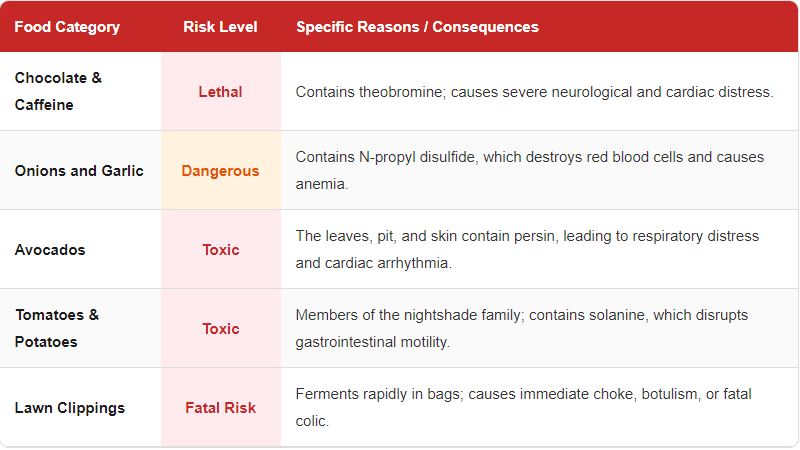
Understanding horse what eat boundaries means protecting them from their own curiosity. Horses lack the biological ability to vomit; once they swallow a toxic substance, it must pass entirely through their complex digestive tract, maximizing the damage window.
Clean Storage and Secure Facilities
Keeping track of good treats for horses is a great way to bond with your animal. However, ensuring those treats stay secure is a matter of facility safety.
Always store your kitchen supplements, grains, and specialty horse foods in heavy-duty, rodent-proof containers inside a dedicated feed room. Utilizing robust, lockable sliding stall doors and tight-fitting latches prevents a loose horse from gaining access to the feed aisle and overeating, keeping your herd safe, sound, and performing at their absolute peak.
 English
 French